How to Reduce SIBO Recurrence Risk: An Dietitian’s Guide
Have you had SIBO (Small Intestinal Bacterial Overgrowth)? If you have been treated for SIBO only to have your symptoms return right after treatment, you are not alone. Recurrence is common; however, some underlying factors may contribute to SIBO returning.
SIBO often returns as the root cause hasn’t been addressed. Some root causes are:
- slow gut motility (often after food poisoning)
- long-term PPI use
- low thyroid function
- diabetes
- prior abdominal surgery or adhesions
- older age
Continue reading about how to reduce the risk of SIBO recurrence by supporting gut health.
This information is for educational purposes only. As with any medical advice, always check with your doctor or healthcare professional for personal and age-appropriate recommendations.
Let’s get started.
Want a copy of this article? Click here to download a copy.
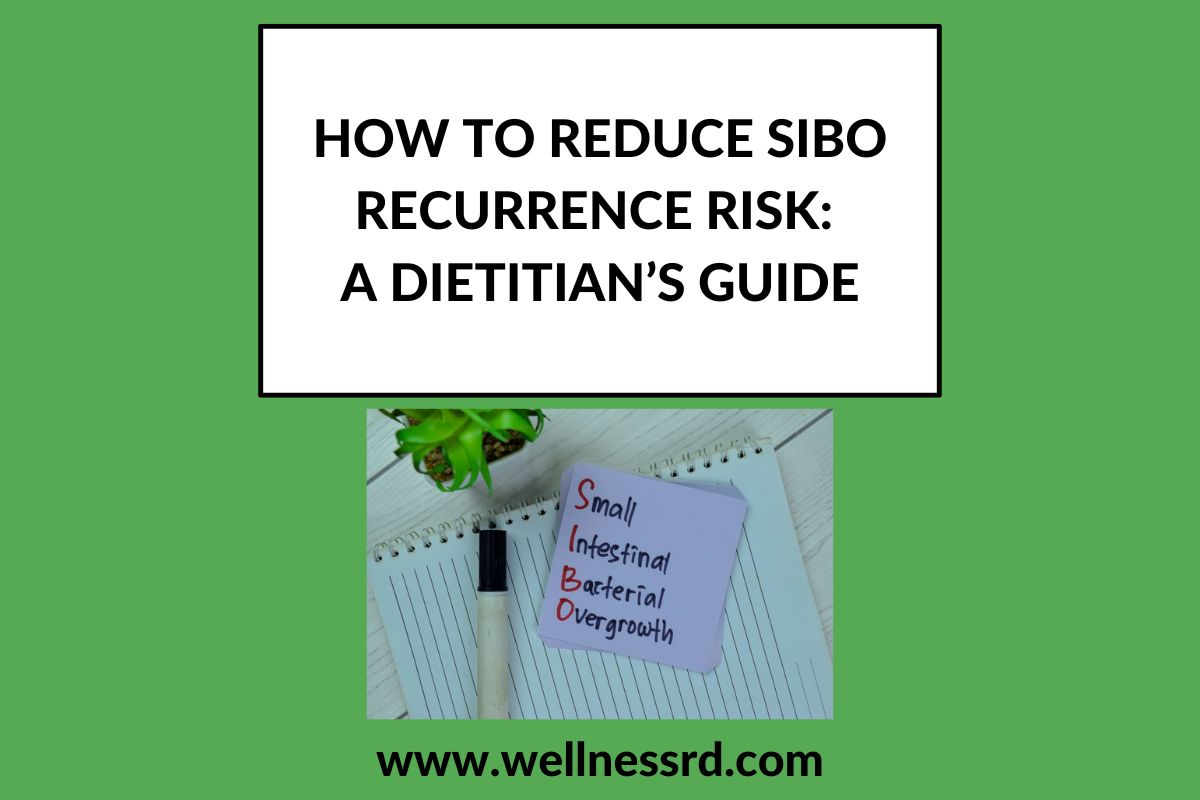
SIBO or Small Intestinal Bacterial Overgrowth is when too many bacteria are in the small intestine. It is often treated by your healthcare professional with antibiotics or antimicrobials however, the recurrence rate is high (1).
Table of Contents
SIBO After Food Poisoning?
One common contributing factor to SIBO is food poisoning (2).
In my practice, I see clients getting SIBO after food borne illness, often coupled with chronic health issues. This connection highlights the importance of food safety practices to minimize the risk of such illnesses.
With SIBO recurrence rate at about 45%, gut health management is crucial (3). Here are tips to reduce the risk of SIBO recurrence.
Tips to Reduce the Risk of SIBO Recurrence
Find and Treat the Root Cause with Your Healthcare Team
SIBO oftens returns as root cause of the overgrowth has not been addressed. This is the first step.
Limit Snacking to Allow Your Gut to Rest
Spacing meals 4 hours apart to give the bowels a rest. The MMC (migrating motor complex) is your gut’s housekeeper which works during periods of fasting. If the MMC is not allowed to do its job, it can affect gut health and may lead to symptoms like gas, bloating, constipation, or loose stools.
Stop Eating 3 Hours Before Bedtime
The MMC cleans the gut while it is at rest by removing food remnants and bacteria while you sleep (4). Give the bowels a rest before bedtime.
Move Your Body
Keep moving your body to support a healthy gut microbiome and motility. Avoid sitting for long periods of time. Set reminders to get up and move. Exercising allows blood to move through your digestive tract and supports a healthy gut microbiome (5).
Reintroduce a Plant-Rich Diet
After following a low FODMAP or SIBO diet, slowly add fiber and probiotic foods (6). Aim for a colorful variety of plant-based options to nourish your gut.
Maintain Healthy Stomach Acid
Sufficient stomach acid is vital for managing bacterial growth. When a healthy amount of stomach acid is present, this limits excessive bacteria in the small bowel (7). Try bitters, apple cider vinegar, or HCL before meals, however, always check with your healthcare practitioner before starting supplements. Some of these aren’t safe for people with ulcers or gastritis, or for those taking NSAIDs or steroids.
Chew Slowly, Mindful Eating
A simple tip is to eat mindfully and chew your food thoroughly. The cephalic phase of digestion is when the sight, smell, taste, or thought of food starts the digestive juices flowing. Engaging your senses in the eating process primes your digestive system for optimal function.
Reduce Stress
Incorporate meditation, yoga, mindfulness, or deep breathing to support digestive health.
Brain Programs
I have seen programs such as Gupta, DNRS, EMDR, or the NERVA app be helpful to rewire your brain’s response to stress and to support gut health.
Probiotics Balance the Microbiome
Research shows people with SIBO may benefit from probiotics as they improve digestive health (8). In a recent study, the probiotics group showed a significantly higher SIBO decontamination rate than the non-probiotic group but the authors rated this as low quality evidence (9). I prefer soil-based probiotics as they improve and shift gut ecology balancing the microbiome (10). Some people feel worse on probiotics so monitor symptoms.
Probiotics in fermented foods like kimchi, sauerkraut, and yogurt can support gut health by contributing to a healthy microbiome.
Natural Prokinetic Supplements Improve Gut Motility
Prokinetics help move food and debris through the digestive tract (6). If your motility is slow, you may be prone to constipation. Like stagnant water, bacteria may grow if the bowels do not move.
Herbal prokinetic supplements include:
- Ginger root
- Artichoke leaf
- Gentian root
- Licorice root (caution with high blood pressure and low potassium)
- Peppermint leaf
Natural prokinetic supplements are:
- Motility Activator
- MotilPro
- Motility Pro
- MegaGuard
*Be cautious as some prokinetics may interfere with medications. Always check with your healthcare professional before taking any supplements.
Final Thoughts
SIBO or Small Intestinal Bacterial Overgrowth occurs when there are too many bacteria in the small intestine. Recurrence of SIBO is common and there are many ways to support a healthy gut.
Resting the gut, moving your body, being mindful, and adding gut-supporting supplements like digestive enzymes, probiotics, fiber, and prokinetics can help restore microbial balance.
Read more from my blog here.
© Amy Archer RDN, CLT, CHWC