Unlock the Power of Urolithin A for Optimal Brain Health – A Dietitian Explains How!
Trying to optimize your brain health? Have you heard all the buzz about Urolithin A?
Continue reading to find out how this gut-made molecule may support your cognition, memory, and healthy brain aging.
This information is for educational purposes only. As with any medical advice, always consult with your doctor or healthcare professional for personalized and age-appropriate recommendations.
Let’s explore more about Urolithin A.
Want a copy of this article? Click here to download a copy.
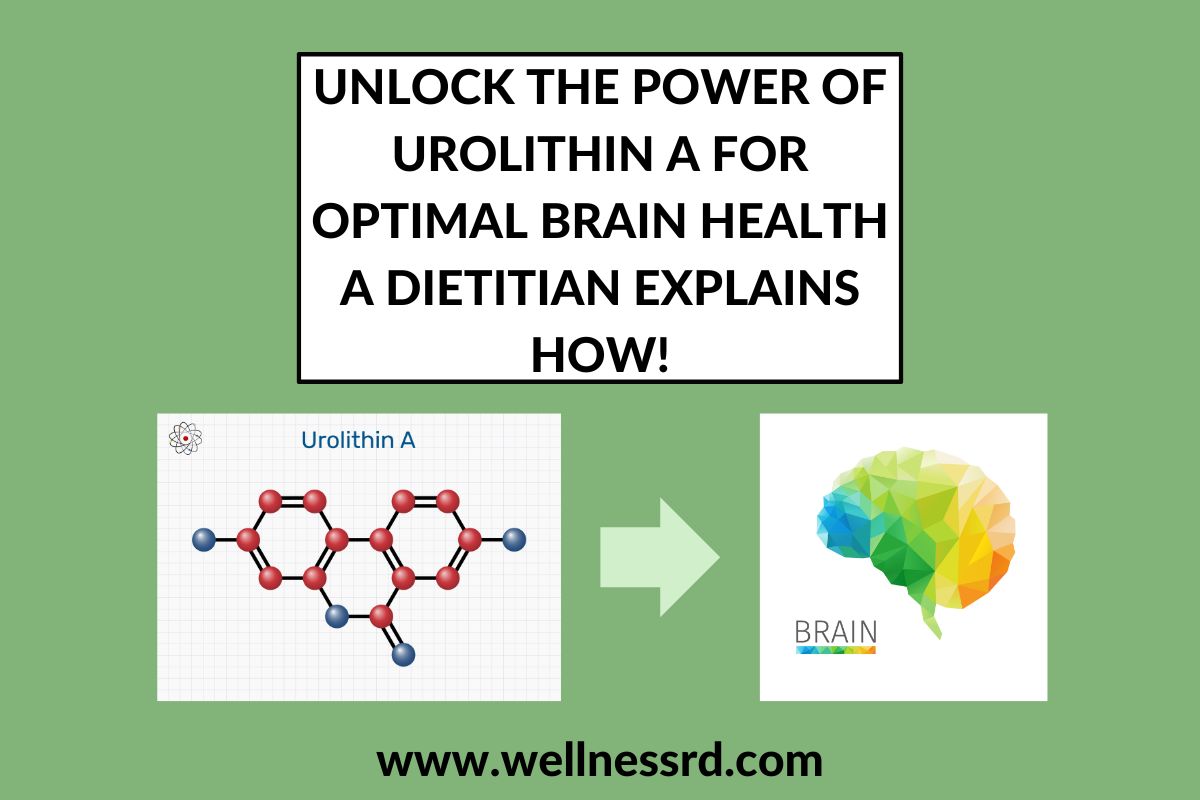
Table of Contents
What is Urolithin A?
Urolithin A is a unique compound produced in the gut- not something we consume directly from food. Instead, when we eat foods rich in ellagitannin, a type of polyphenol found in walnuts, pomegranates, and certain berries, our gut microbes transform these compounds into Urolithin A (1). The large compound ellagitannins break down to the smaller ellagic acid in the gut then, the gut microbes produce Urolithin A.
The catch: not everyone’s gut microbiome makes enough Urolithin A!
Let’s take a closer look at this gut-produced postbiotic, starting with an overview of the key benefits associated with Urolithin A.
What are the Benefits of Urolithin A?
- Anti-inflammatory– May help manage inflammatory conditions such as arthritis and inflammatory bowel disease (2).
- Mitochondrial function– Supports cellular energy production, metabolism, and aging (3).
- Muscle health and exercise performance– Associated with improved muscle function, endurance , and recovery (4, 5, 6).
- Metabolic health and insulin sensitivity– Potential role in managing diabetes and metabolic syndrome (7).
- Anti-Aging Benefits- Linked to extending health span and supporting longevity (8).
- Neuroprotective effects- May play a role in neurodegenerative conditions such as Alzheimer’s and Parkinson’s disease (9).
Let’s take a closer look at how this may support brain health and longevity.
How Your Gut Makes Urolithin A
As mentioned earlier, Urolithin A is a postbiotic produced in our gut when we consume polyphenol-rich foods that contain ellagic acid.
However, research suggests this process is not universal. In a recent study, fewer than 40% of participants were able to produce Urolithin A from diet alone (the study used pomegranate juice) (10). A healthy gut microbiome is necessary to convert the precursors to Urolithin A.
Incorporating Urolithin A into Your Diet
Polyphenol Intake for Food
Foods rich in polyphenols, ellagitannins and ellagic acid, can convert to Urolithin A by gut microbes. These nutrient-dense superfoods include pomegranates, strawberries, walnuts, raspberries, and tea (11, 12, 13). Taking a food-first approach is recommended, as these foods also provide a wide range of additional nutrients, antioxidants, and fiber that support overall health.
What About Urolithin A Supplements?
In a randomized, placebo-controlled trial, middle-aged adults received either 1000mg of urolithin A or a placebo for 28 days. The results suggested urolithin A may support immune health by enhancing mitochondrial function and helping reduce age-related immune decline and “inflammaging”- the chronic inflammation associated with aging (14). While these findings are promising, additional research is needed to understand the long-term effects and clinical significance.
What are the Potential Neuroprotective Effects of Urolithin A?
Research is exploring Urolithin A for potential health benefits, including promoting mitophagy- the process of clearing damaged mitochondria- the cell’s energy producers- and supporting overall mitochondrial health. Other potential benefits include:
- Anti-inflammatory
- Antioxidant
- Anti-senescence
- Anti-apoptotic properties (15).
There is research studying urolithin A’s potential in protecting the brain. Examples include urolithin A’s role in combating age-related decline, and therapeutic potential for treating Central Nervous System (CNS) disorders such as Alzheimer’s disease and Parkinson’s disease (16, 17).
Conclusion
Urolithin A is a postbiotic formed in the gut after consuming polyphenol-rich foods that contain ellagic acid.
Rich sources of ellagic acid include pomegranate, strawberries, walnuts, raspberries, and tea. Urolithin A supplements have also shown promise.
Emerging research suggests urolithin A may support brain health by enhancing mitochondrial function and reducing inflammation, with potential implications for Alzheimer’s and Parkinson’s disease.
Read more from my blog here.
© Amy Archer RDN, CLT, CHWC